HAND emphasized that investing in human capital and addressing the skills gap remain key national priorities during Syria’s early recovery phase, during its participation in the 2026 Syrian Private Sector Dialogue Conference in Damascus.
The conference convened representatives from the private sector, government institutions, and civil society organizations to strengthen dialogue and coordination in support of recovery efforts and sustainable development in Syria.
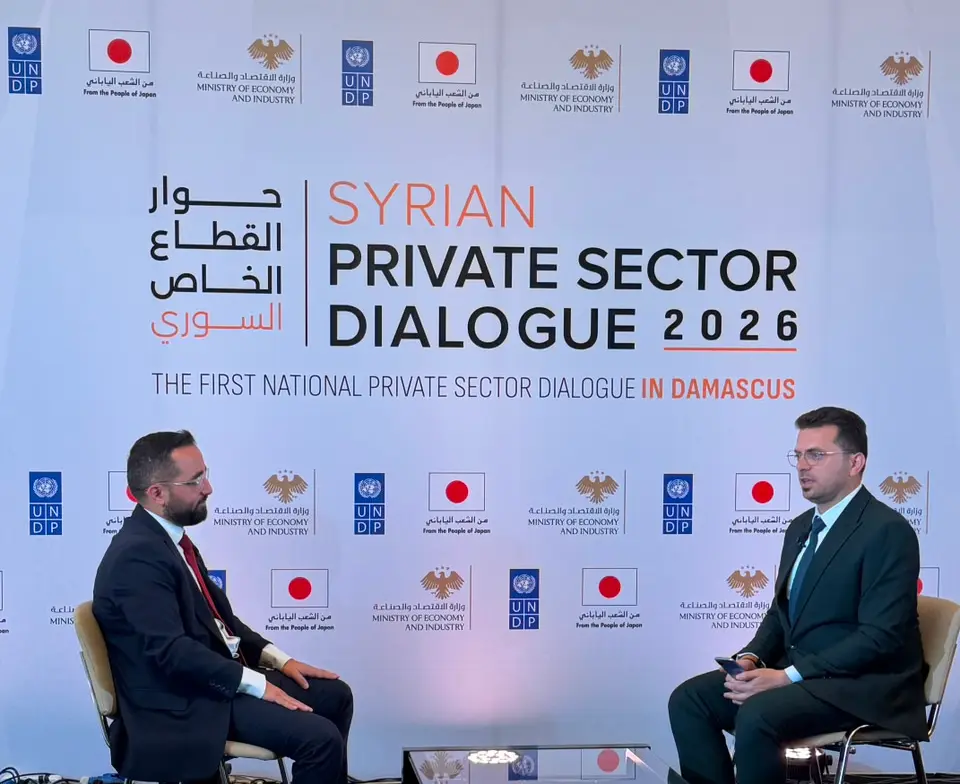
Syrian Al-Ikhbariya TV interviewed Mr. Saadettin Muvakit, Executive Director of HAND, who discussed the organization’s role in the conference and the importance of civil society in advancing socio-economic development.
Muvakit stressed that investing in people must remain a top priority, noting that the main challenge lies in the gap between labour market needs and available skills among young people.
«"The challenge we face today is not the lack of job opportunities, but the gap between available skills and labour market needs, making investment in human capital a fundamental priority during Syria's early recovery phase."
– Saadettin Muvakit»
He added that HAND is translating this vision into action through the Mawared project under the Nomu Al Ghurair vocational pathway, within the Learn to Earn model of the Abdulla Al Ghurair Foundation, in partnership with the Dr. Abdul Qader Sankari Foundation.
The project aims to train 2,500 young people across several Syrian governorates, with activities currently underway in Aleppo, Damascus, and Homs, and planned expansion to Latakia and Tartous.
The programme focuses on three key tracks: vocational skills, technology and IT, and administrative and business functions, aligning training with labour market needs.
Muvakit emphasized that collaboration between the private sector and civil society is essential to bridge the skills gap and improve employment opportunities.
He noted that the conference represents an important step toward strengthening dialogue and coordination among stakeholders and reinforcing investment in people as the foundation of sustainable development.
HAND believes that sustainable recovery depends not only on reconstruction, but on empowering young people with the skills needed to contribute to economic growth and build more resilient communities.